
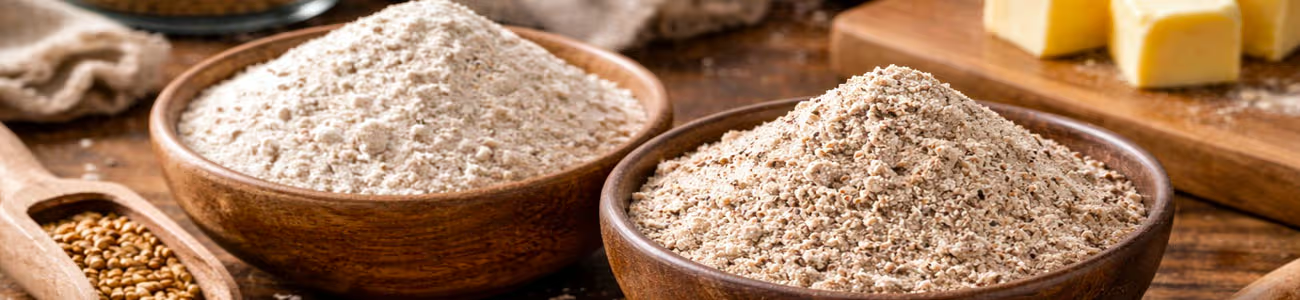
Flour doesn’t just “hold” a dough together: it defines texture, chew and part of the aromatic profile. Non-hybrid spelt and petit épeautre bring a more rustic identity and a different mouthfeel to cookies, shortbread and dry biscuits. Here’s what changes—and how to adjust simply.
1) Non-hybrid spelt & spelt: what really changes
| Key point | “Classic” flour | Non-hybrid spelt / spelt |
|---|---|---|
| Flavour | Neutral, discreet | More aromatic, rustic/nutty notes |
| Texture | Very consistent | More pronounced chew, sometimes more crumbly |
| Absorption | Predictable | Can vary: resting helps stabilise |
2) Cookies: how to adapt without mistakes
With more characterful flours, the goal is to keep the soft/crisp balance.
- Chill the dough: at least 2 hours (overnight is ideal) for better stability.
- If the dough feels too soft: add a touch more flour or extend resting time (often enough).
- Watch the spread: cold dough + cold tray = better control.
Texture tip
For thicker cookies: even portioning + resting + controlled baking (remove while the centre is still tender).
3) Shortbread: flour influences tenderness
Shortbread relies on sablage (flour coated with butter). More aromatic flours create a strong signature, but require an even gentler touch: avoid overworking the dough.
- Careful sablage, then minimal mixing.
- Chill for clean cutting and shaping.
- Watch the bake: light, even colour preserves tenderness.
4) What about “less sugar”?
More aromatic flours often deliver more flavour even with gentler sugars. This supports balanced indulgence: less sugar, but real depth.
FAQ
Discover: our shortbreads .