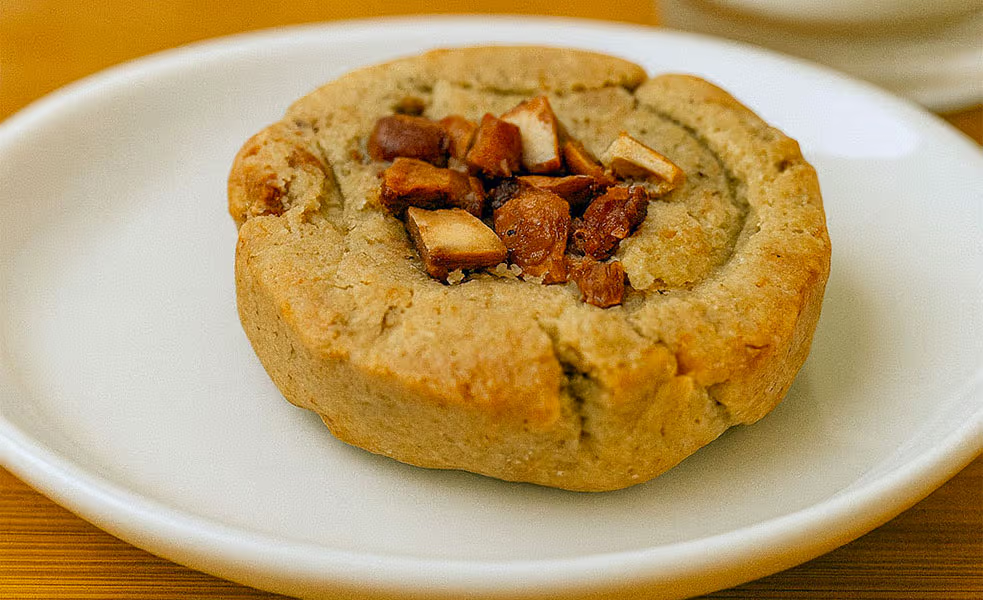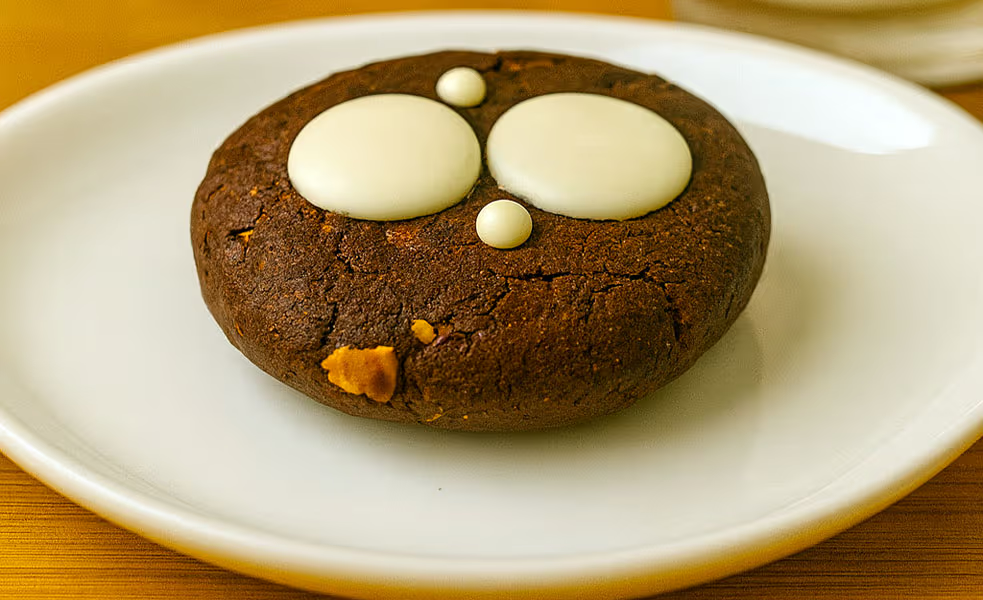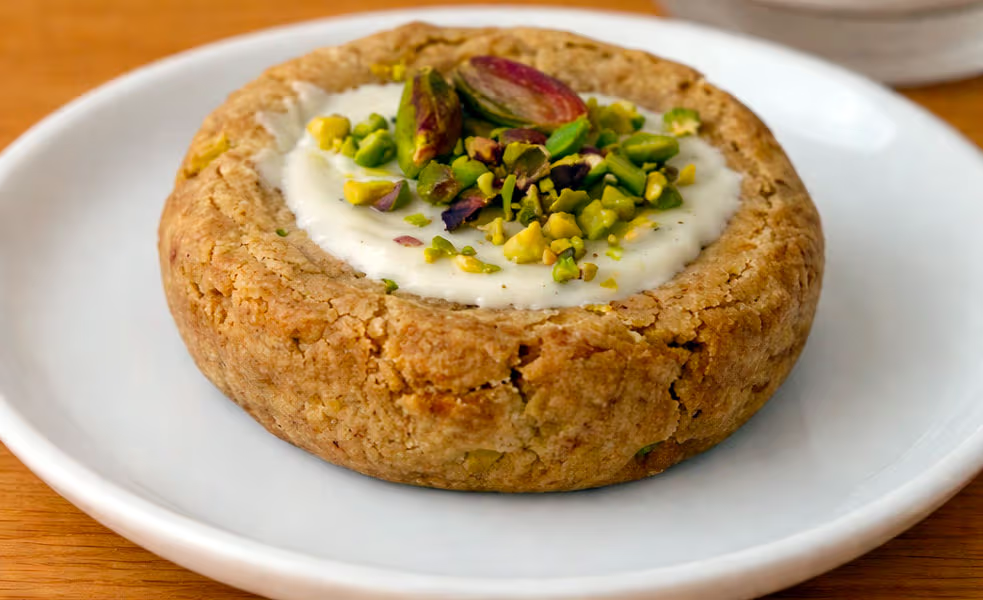
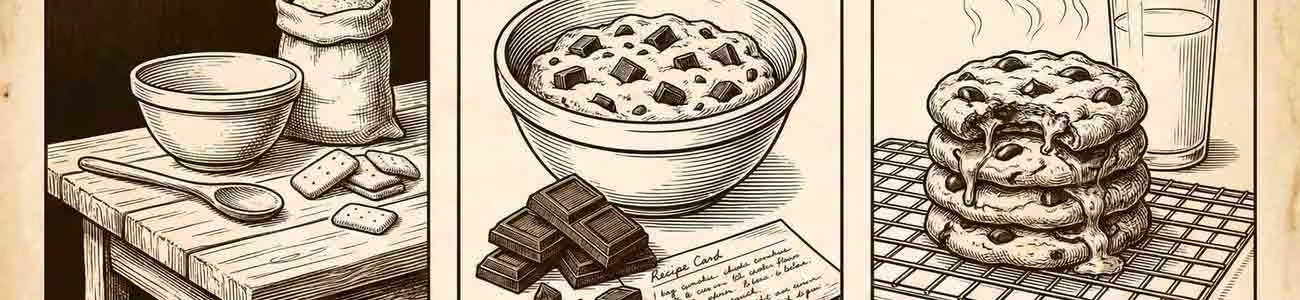
The cookie has become an iconic treat: simple on the surface, yet capable of delivering a truly “premium” experience when the recipe, baking, and ingredients are mastered. To understand why the chocolate chip cookie conquered the world, we need to go back to its origins… and then to a key moment: 1938.
1) Cookie origins: “koekje” and traditional biscuits
Long before the modern cookie, European cultures had a long tradition of small biscuits: easy to store, easy to carry, and perfect for sharing. The term koekje (little biscuit) is often linked to Dutch influences that travelled to North America.
2) From the Old Continent to America: a recipe that becomes popular
With migration, baking traditions crossed the Atlantic. “Cookies” became everyday treats: quick to make, endlessly adaptable (nuts, spices, dried fruit), and perfectly suited to coffee and snack culture. At this stage, it was mostly a “simple” biscuit… until the big turning point.
3) 1938: the invention of the “Chocolate Chip Cookie” by Ruth Wakefield (Toll House)
The historic turning point came in 1938, in Massachusetts (United States). Ruth Wakefield, owner of the Toll House Inn, prepared a cookie dough and folded in chunks of chocolate. When baked, the chocolate didn’t “disappear”: it kept some of its shape and created melty pockets. The Toll House Cookie became the reference, and the chocolate chip cookie entered history.
Why it was a revolution
- Chocolate adds gooey richness and length on the palate.
- Texture becomes contrasted: edges + center.
- The recipe is endlessly adaptable (hazelnuts, pistachios, vanilla, caramel…).
The real “secret” of chocolate chip cookies
- Quality chocolate chunks → cleaner melt, clearer aromas.
- Controlled baking → the cookie also sets out of the oven.
- The right sugar/butter/flour balance → not “dry”, not “too sweet”.
4) The evolution of textures: the science of “chewy”, “crispy”, and “gooey”
Over time, the cookie moved away from the dry biscuit to explore complex textures: chewy (soft bite), crispy (crunchier), gooey (very melty center). This variety relies on a few very practical levers:
- Maillard reaction: responsible for browning and “toasty/caramelised” notes.
- Sugar choices: brown sugar (molasses) retains more moisture → chewier cookies; white sugar promotes crispness.
- Crystallisation: depending on baking, sugar sets the texture differently as it cools.
- Dough resting / maturation: chilling helps develop flavour and better control spreading.
- Temperature & time: overbake = dry; bake just right = tender center and set edges.
5) The indulgent cookie today: artisanal, premium, exceptional ingredients
The modern cookie has become a creative playground: thickness, molten center, noble nuts, couverture chocolate… In an artisanal approach, the quality of ingredients makes all the difference: characterful butter, carefully selected flours, and high-end chocolate (such as Valrhona) for a longer, more complex aromatic profile.