A name from Dutch
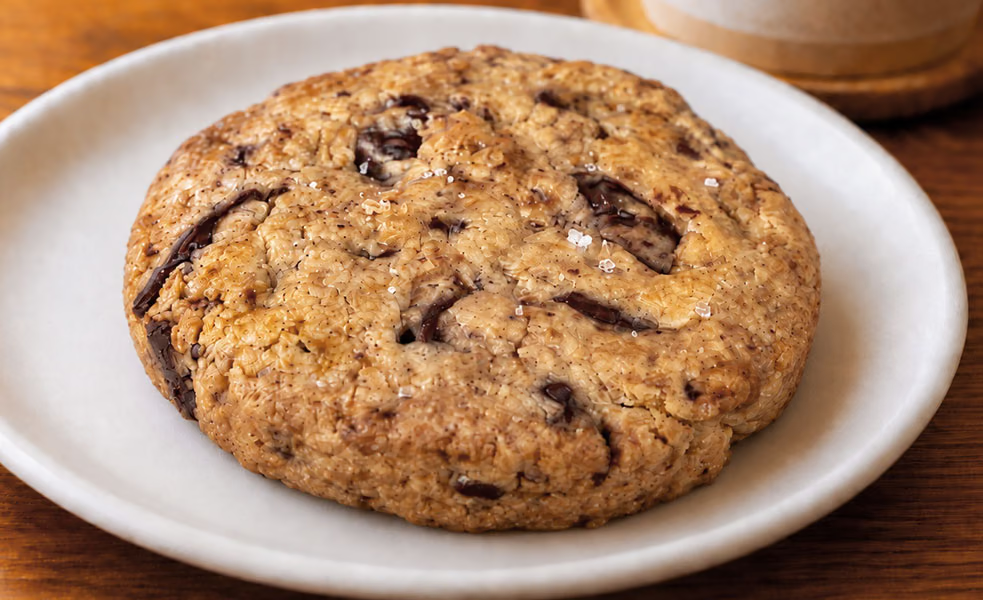
The name cookie comes from koekje, a Dutch word meaning ‘little cake’. Before describing the familiar chocolate chunk treat, it therefore refers to a family of small baked goods.
This origin reminds us how many forms a cookie can take. Thinner or thicker, delicately crisp or tender in the centre, each recipe has its own personality. Behind one name, ingredient choices and techniques offer different sensations.
Ruth Wakefield and the chocolate chip
In the 1930s, Ruth Wakefield and her husband ran the Toll House Inn in Whitman, Massachusetts. There she developed a biscuit to which she added chopped chocolate: the Chocolate Crunch Cookie.
Her recipe appeared in her cookbook in 1938. Ruth was a culinary professional trained in home economics: her creation reflects careful recipe work and a focus on enjoyment. Her biscuit would become a reference for the chocolate chip cookie.
A recipe that travels
Its success soon spread beyond the Toll House Inn’s tables. The recipe appeared in the press and on radio. In 1939, Nestlé obtained Ruth Wakefield’s agreement to reproduce it on its chocolate packaging.
This exposure helped bring the biscuit into family kitchens. Chocolate for chopping, then ready-to-use chips, made it easier to prepare. The cookie became a treat to make at home, share and reinterpret.
A story that continues in workshops
Today, cookies come in very different recipes. At Opaléia, I continue this story around einkorn and spelt, with the House’s own flavour combinations.
My workshop techniques, from rubbing in to baking, are described in an article about the know-how behind my cookies.
Discover how I make my cookies